Venice Gardens is a large, established residential neighborhood in Venice, Florida 34293, known for classic Florida ranch homes, mature landscaping, lakes, convenient shopping and a central location between Venice Island and southern Venice. Development began in the 1950s and continued through the 1960s and early 1970s, creating a neighborhood with considerably more architectural and property variety than buyers typically find in newer master-planned communities.
Most of the traditional Venice Gardens neighborhood is not governed by a mandatory master homeowners association. Instead, residents may voluntarily join the Venice Gardens Civic Association for access to its community pool, community center and organized activities. Venice Gardens is also not gated and does not have a CDD, making it particularly appealing to buyers who prefer an established neighborhood with fewer community-wide ownership expenses and restrictions.
Homes in Venice Gardens
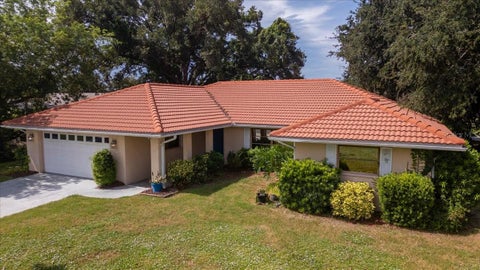
The first Venice Gardens plat was recorded in 1956, and development continued through 1972. Sarasota County records describe the neighborhood as predominantly single-family residential, with most homes constructed of concrete block and an average construction year of approximately 1969 at the time of the County’s neighborhood study.
Because numerous builders constructed homes throughout Venice Gardens over several decades, there is no single floor plan or architectural style.
Buyers may find:
- Two-, three- and four-bedroom single-family homes
- Classic mid-century Florida ranch designs
- Concrete-block construction
- Carports and one- or two-car garages
- Private swimming pools
- Screened lanais and Florida rooms
- Updated kitchens and bathrooms
- Lake and canal views
- Larger corner and cul-de-sac lots
- Fenced yards
- Mature oak, palm and tropical landscaping
- Hurricane-impact windows, shutters and other property-specific upgrades
Many original homes have been expanded or substantially renovated over the years, while others retain more of their original mid-century layout and finishes. Buyers should compare roof age, HVAC systems, plumbing, electrical systems, windows, hurricane protection and other improvements when evaluating individual properties.
Venice Gardens History
Venice Gardens is one of the neighborhoods that helped expand the Venice area beyond Venice Island during the postwar growth of Sarasota County.
The first subdivision plat was recorded in 1956. Development continued throughout the late 1950s, 1960s and early 1970s, with the final Venice Gardens plat recorded in 1972.
The community was developed in multiple phases rather than all at once. Venice Gardens, Inc. was the predominant developer for much of the neighborhood, while numerous individual builders constructed residences throughout the subdivision.
Lakes and waterways were incorporated into the original neighborhood plan, and the community recreation center became an important gathering place for residents during the early years of development.
No Mandatory Master HOA in Venice Gardens
One of the most important distinctions for buyers is that the traditional Venice Gardens neighborhood does not operate under a mandatory master homeowners association.
The Venice Gardens Civic Association is a voluntary nonprofit community organization. Homeowners are not automatically required to join simply because they own a property in the traditional Venice Gardens neighborhood.
Voluntary membership provides access to association facilities and activities, including the community swimming pool and community center.
Buyers should still review the title, Sarasota County zoning requirements and any property-specific restrictions or easements associated with the residence they are considering.
Venice Gardens vs. Jacaranda West
The legal subdivision history of Venice Gardens can occasionally create confusion for buyers.
A total of 34 plats were originally recorded under the Venice Gardens name. Sarasota County’s Venice Gardens Neighborhood Plan identifies 30 of those plats as the traditional Venice Gardens neighborhood. The remaining four plats—Units 31 through 34—became part of what is now known as Jacaranda West.
As a result, an MLS listing or legal description may occasionally reference a Venice Gardens unit even though the residence is actually located within the separately governed Jacaranda West community.
Jacaranda West has its own homeowners association structure and deed restrictions, so buyers should confirm the actual community and association requirements for the specific property rather than relying solely on the legal subdivision name.
Venice Gardens Civic Association Pool & Community Center
The Venice Gardens Civic Association has served the neighborhood since 1958 and operates a community center and swimming pool at 406 Shamrock Boulevard.
Membership is voluntary, and association members can enjoy recreational and social opportunities that may include:
- Community swimming pool
- Water aerobics
- Exercise classes
- Line dancing
- Community social events
- Pool parties and picnics
- Tiki Night events
- Potluck gatherings
- Seasonal and family-oriented community events
- Community hall and gathering space
The Civic Association provides an unusual option for buyers: residents can choose to participate in community recreation and social activities without being required to pay mandatory master HOA dues.
Venice Gardens Park
Adjacent to the Civic Association property is Venice Gardens Park, a Sarasota County neighborhood park located at 400 Shamrock Boulevard.
The park is separate from the voluntary Civic Association and is maintained by Sarasota County. Park features include:
- Playground
- Picnic shelter and pavilion
- Picnic areas
- Multi-purpose field
- Unpaved walking trail
- Dog-friendly areas with leashes required
The combination of the county park and neighboring Civic Association pool and community center creates a central recreational gathering area within Venice Gardens.
Lakes, Canals & Waterfront Homes
Water is an important part of the Venice Gardens landscape. Lakes and interconnected waterways were incorporated into the neighborhood during its original development, creating a number of waterfront homesites throughout the community.
Depending on the property, buyers may find residences overlooking lakes, canals, ponds or landscaped green spaces. Waterfront homes can offer attractive views from lanais, pools and primary living areas without requiring the significantly higher prices often associated with Gulf-front or Intracoastal property.
Flood-zone classifications and insurance requirements vary by location, however, so buyers should review the current flood designation and elevation information for the individual property.
No CDD Fees in Venice Gardens
The traditional Venice Gardens neighborhood does not have a Community Development District, commonly referred to as a CDD.
This differs from many newer master-planned communities in southern Sarasota County where annual CDD assessments may appear on the property-tax bill.
Most traditional Venice Gardens homeowners also do not have mandatory master HOA dues, although individual enclaves, condominiums or properties that are legally associated with neighboring communities may have separate association expenses.
Boats, RVs & Property Flexibility
Venice Gardens generally offers more property-use flexibility than many newer gated developments, particularly within sections that are not governed by a mandatory homeowners association.
Depending on the property and current Sarasota County regulations, buyers may have greater flexibility regarding boats, recreational vehicles, fences, landscaping and other residential uses.
That flexibility should not be interpreted as an absence of regulations. Sarasota County zoning, parking ordinances, building codes and property-specific restrictions still apply, so buyers planning to store a boat, RV, trailer or commercial vehicle should verify the current requirements for the individual property.
Venice Gardens Location
Venice Gardens is located in southern Sarasota County within the Venice, Florida 34293 ZIP code.
Sarasota County’s traditional Venice Gardens planning area is generally bounded by Center Road to the north, U.S. 41/Tamiami Trail to the west, Briarwood Road to the south and Bal Harbour Drive to the east.
The central location provides convenient access to shopping, grocery stores, restaurants, healthcare and everyday services along U.S. 41 and Jacaranda Boulevard.
Historic Downtown Venice and Venice Island are only a short drive away, while Center Road and Jacaranda Boulevard provide access toward Interstate 75 and the newer shopping, dining and recreation available throughout southern Venice and Wellen Park.
Nearby Beaches & Attractions
Venice Gardens residents are convenient to several Gulf Coast beaches, including Venice Beach, Caspersen Beach and Brohard Beach.
Nearby recreation includes the Legacy Trail, Shamrock Park & Nature Center, Venetian Waterway Park, Venice Fishing Pier, boating, fishing, kayaking and numerous public and private golf courses.
Historic Downtown Venice offers locally owned restaurants, boutiques, galleries, Venice Theatre, parks and year-round community events, while the neighborhood’s proximity to U.S. 41 provides convenient access to shopping and everyday services.
Similar Venice Communities
- South Venice – A large established neighborhood offering diverse single-family homes, no mandatory master HOA and optional access to a private Gulf beach ferry and community boat ramp.
- Venice East – An established neighborhood east of Jacaranda Boulevard with single-family homes, mature landscaping and an optional neighborhood association.
- Jacaranda West – An established deed-restricted community with single-family homes, villas, condominiums, lakes and golf-course surroundings.
- Chestnut Creek – A mature Venice community with multiple neighborhoods, lakes, natural areas, single-family homes and maintenance-oriented villas.
- Southwood – An established Venice community offering single-family homes and maintenance-oriented residences near U.S. 41 and Venice East Golf Club.
Amenities at Venice Gardens Venice Florida


Venice Gardens Homes for Sale | Venice Florida
Explore current Venice Gardens homes for sale below. Buyers should compare individual properties based on age, renovations, lake or canal exposure, private pool features, flood-zone classification and whether the residence is part of the traditional Venice Gardens neighborhood or a separately governed nearby association. Most traditional Venice Gardens homes have no mandatory master HOA or CDD, while voluntary membership in the Venice Gardens Civic Association provides access to the community pool and social activities.





Frequently Asked Questions About Venice Gardens
Does Venice Gardens have an HOA?
Most homes in the traditional Venice Gardens neighborhood do not have a mandatory master HOA. The Venice Gardens Civic Association is a voluntary organization that operates the community pool, community center and resident activities. Buyers should verify the association status of the individual property because some legal Venice Gardens plats are now part of separately governed communities such as Jacaranda West.
Does Venice Gardens have a CDD?
No. The traditional Venice Gardens neighborhood does not have a Community Development District or CDD. Buyers should still review the current tax bill and association disclosures for the specific property they are considering.
Can Venice Gardens residents use the community pool?
Residents can voluntarily join the Venice Gardens Civic Association for access to the community swimming pool and association activities. Membership is not automatically included with every Venice Gardens home.
When was Venice Gardens developed?
The first Venice Gardens subdivision plat was recorded in 1956, and development continued through the 1960s and early 1970s. The final Venice Gardens plat was recorded in 1972, and many homes are classic concrete-block Florida ranch residences from that period.
Are there waterfront homes in Venice Gardens?
Yes. Venice Gardens includes numerous lakes and waterways, and some homes offer lake, pond or canal views. Buyers should verify the flood-zone designation, elevation information and insurance considerations associated with the specific property.